

Choosing Short Horror Movies Before Bed
A quiet night can become surprisingly intense when the right horror story arrives at exactly the right moment. Choosing entertainment before sleep is not only about finding something frightening, it is also about matching runtime, atmosphere, and storytelling pace with the limited time available. A well-chosen film can deliver suspense and curiosity without turning a simple evening into an unnecessarily long viewing session.
Short Horror Movies are particularly useful for viewers who want a complete horror experience without committing to a lengthy feature. Their compact structure can make it easier to follow a focused mystery, supernatural encounter, or psychological twist from beginning to end. The key is to consider how the film fits into the entire night rather than judging it solely by how scary it appears.
Choosing Short Horror Movies
The first decision should focus on what kind of experience fits the evening. Runtime, intensity, recent viewing habits, and narrative focus can quickly narrow the choices while keeping the selection process enjoyable rather than overwhelming. A useful Evening Viewing Routine starts with knowing how much time is genuinely available before bedtime. When the viewing window is limited, a concise story with a clear conclusion can feel more satisfying than beginning a longer film that may need to be interrupted.
Checking film length
Film length is one of the simplest factors to check before pressing play. A short production can provide enough room for suspense, atmosphere, and a memorable ending while keeping the overall session manageable. Checking the runtime first also prevents an accidental late-night viewing session caused by choosing a movie that is longer than expected.
Matching horror intensity with bedtime
Horror intensity deserves equal attention because different subgenres create different viewing experiences. Psychological horror may rely on lingering uncertainty, while supernatural horror can emphasize mystery, atmosphere, or sudden tension. Choosing an intensity that feels comfortable for the final part of the evening can make the viewing experience more controlled.
Considering recent viewing preferences
Recent viewing preferences can make the next choice easier. Someone who has already watched several intense supernatural stories might prefer a mysterious or atmospheric short film, while a viewer interested in twists may enjoy a tightly constructed psychological story. This simple rotation keeps the experience varied without requiring an extensive search every night.
Better Evening Viewing Routine
A better evening routine is built around boundaries rather than quantity. Instead of continuously searching through recommendations, viewers can decide what they want to watch, how long they want to watch, and when the screen session should end. The American Academy of Sleep Medicine has emphasized the importance of consistent sleep habits and reducing electronic distractions around bedtime. This makes a defined viewing period a practical consideration when entertainment is part of the nightly routine.
Setting a clear viewing time
A clear viewing time can prevent a single movie from expanding into an unplanned sequence. Decide when the film should begin and allow enough time afterward to transition toward sleep. The objective is not to remove entertainment from the evening, but to give it a deliberate boundary.
Selecting films with focused stories
Focused stories are often easier to enjoy during a limited viewing window. A contained setting, small cast, or single central mystery can create narrative momentum without requiring extensive background information. This makes compact horror especially appealing to viewers searching for a complete story in one sitting.
Limiting choices before starting
Too many options can become its own form of distraction. Narrowing the selection to a few suitable films based on length, genre, and mood makes the final decision much faster. Once the choice is made, closing the search screen can help shift attention from browsing to actually experiencing the story.
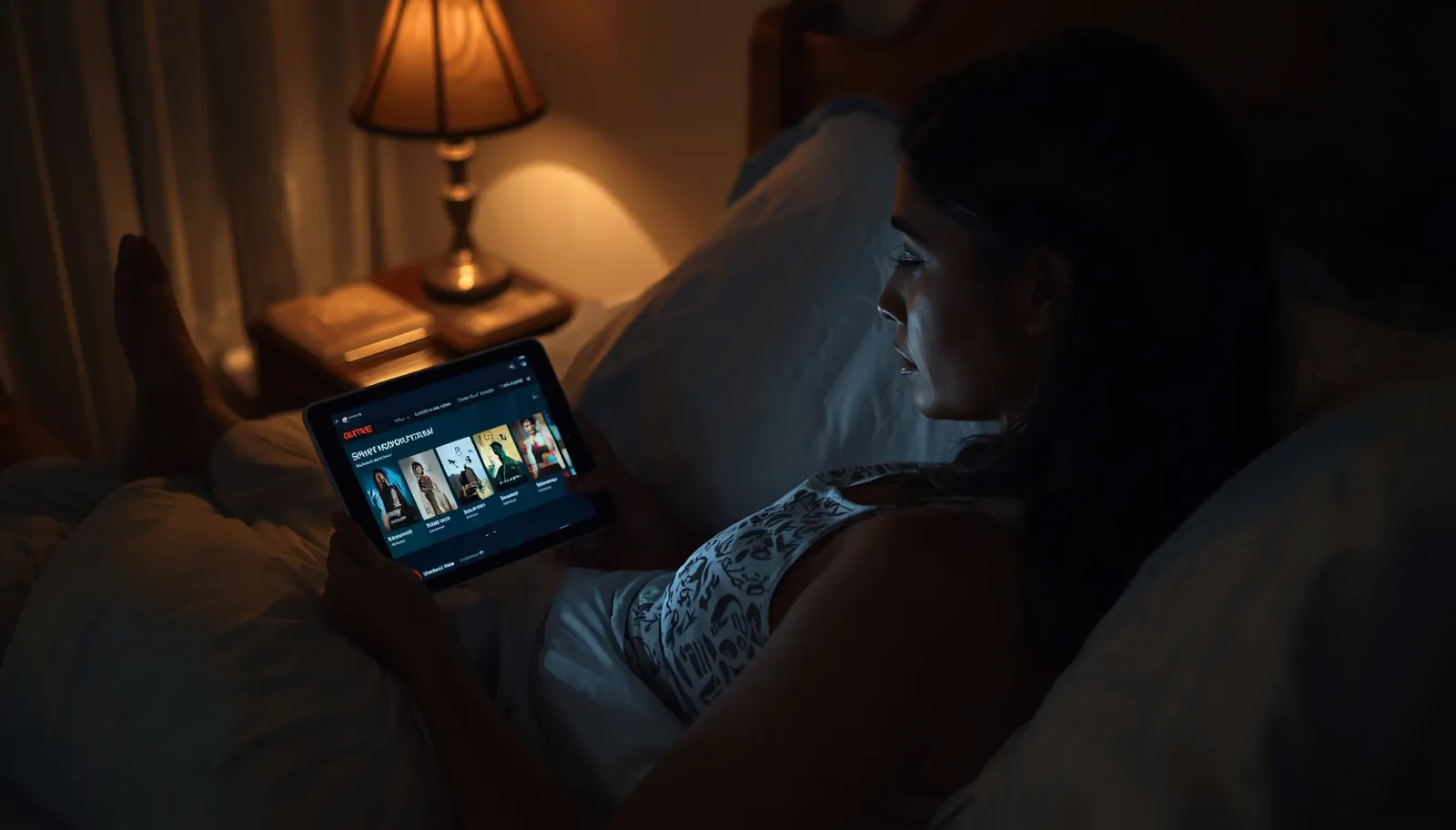
Easier Bedtime Movie Choices
Finding the right film becomes simpler when the same practical criteria are used consistently. Rather than searching from scratch every evening, viewers can develop a personal pattern based on preferred runtime, horror style, and desired level of tension. The goal is a viewing process that feels effortless while still respecting the purpose of the evening. As sleep researcher Matthew Walker has frequently explained, consistent sleep routines are important for healthy sleep, which makes intentional screen habits worth considering when planning night time entertainment.
Reducing unnecessary browsing time
Unnecessary browsing can consume more time than the movie itself. Checking runtime, genre, story focus, and personal mood provides enough information to eliminate unsuitable choices quickly.
Keeping viewing sessions manageable
A manageable session should fit comfortably within the available evening. Viewers can consider whether the movie leaves enough time for their normal bedtime activities rather than treating the film as an isolated decision. This approach keeps entertainment enjoyable without allowing the viewing session to dictate the entire night.
Finding suitable short film patterns
Certain storytelling patterns can make selection easier. Single-location horror, compact supernatural mysteries, psychological twists, and atmospheric suspense often work well when viewers want a concise narrative. Looking for short scary movies with a complete ending can also help identify stories that provide a stronger sense of closure.
Build A Better Bedtime Routine
The most useful bedtime routine connects the end of entertainment with the beginning of rest. Choosing a suitable film is only one part of the process, because the transition after the credits can also influence how smoothly the evening moves forward. A simple pattern can make that transition predictable, choose the movie before watching, finish the planned viewing period, and move away from continuous browsing afterward. Sleep specialist James B. Maas has highlighted the importance of protecting adequate sleep time, reinforcing the value of treating bedtime as a planned part of the day rather than whatever remains after entertainment.